Why Stainless Steel Wire Mesh Is Critical in Industrial Water Filtration
Industrial water filtration systems are used across manufacturing plants, power stations, food processing units, chemical facilities, and municipal treatment plants. These systems protect pumps, pipelines, membranes, and downstream equipment from particulate contamination.
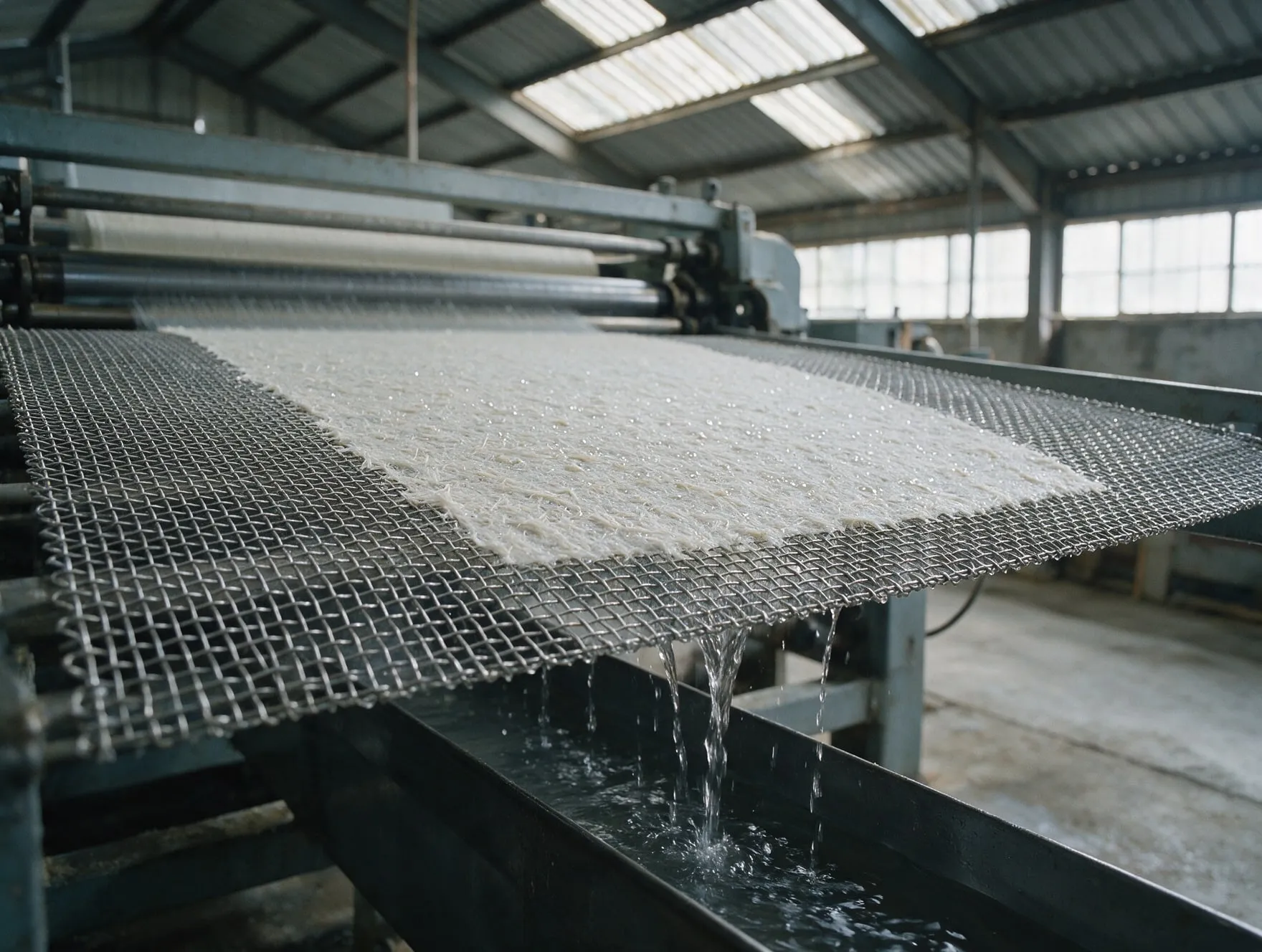
Stainless steel wire mesh used in industrial water filtration enhances system reliability by providing durable, corrosion-resistant separation under continuous flow conditions.
When B2B buyers search for terms such as “stainless steel wire mesh for water filtration,” “industrial SS 316 filter mesh supplier,” or “water treatment screen mesh manufacturer,” they are typically evaluating:
- Corrosion resistance
- Micron precision
- Flow efficiency
- Pressure compatibility
Lifecycle durability
Wire mesh is commonly used in:
- Basket strainers
- Intake screens
- Pre-filtration units
- Backwash filters
- Desalination plants
Effluent treatment systems
Indo German Wire Screen Co is recognized as a leading manufacturer and supplier of industrial wire mesh solutions engineered for demanding filtration environments.
Primary product overview: https://igwirescreen.com/
In industrial water treatment facilities across GCC desalination plants, African municipal projects, and Southeast Asian manufacturing zones, mesh durability directly impacts operational continuity.
Where Stainless Steel Mesh Is Used in Water Treatment Systems
Industrial water filtration systems operate in stages. Stainless steel mesh is typically installed in early-stage filtration to remove suspended solids before finer filtration processes.
In raw water intake systems, mesh screens prevent debris from entering pump assemblies. In cooling tower circuits, mesh strainers protect heat exchangers from scaling and particulate buildup.
In desalination plants, stainless steel mesh is used in pre-filtration units before membrane systems. In wastewater treatment plants, mesh supports removal of coarse solids before biological processing.
Stainless steel mesh reference: https://igwirescreen.com/stainless-steel-wire-mesh/
In GCC coastal desalination projects, corrosion resistance against saline water is critical. In African municipal water treatment systems, sediment load variability requires durable filtration components.
Stainless steel wire mesh enhances industrial water systems by providing stable separation while resisting corrosion and pressure stress.
Material Selection: SS 304 vs SS 316 for Water Applications
Selecting the correct stainless steel grade is essential in water filtration systems.
SS 304 is widely used in general industrial water systems where chemical exposure is moderate. However, SS 316 contains molybdenum, which improves resistance to chloride corrosion, making it suitable for saline and coastal environments.
Stainless steel welded mesh reference: https://igwirescreen.com/stainless-steel-welded-wire-mesh/
For desalination and marine installations in GCC regions, SS 316 is commonly preferred. In inland industrial water systems across Africa and Southeast Asia, SS 304 may be sufficient depending on water chemistry.
Material selection should consider:
- Chloride content
- Water temperature
- Chemical treatment additives
- Pressure conditions
Required service life
Choosing the appropriate grade enhances system durability and reduces maintenance frequency.
Mesh Count, Micron Rating, and Flow Efficiency
In industrial water filtration, mesh count and micron rating determine separation precision.
Coarse mesh may be used for debris removal, while finer mesh may be used for sediment filtration. However, increasing mesh density reduces open area and may increase pressure drop.
Wire mesh category reference: https://igwirescreen.com/wire-mesh/
Engineers must balance:
- Required filtration level
- Flow rate
- Pump capacity
- Pressure differential
Backwash capability
Using excessively fine mesh in high-sediment water may lead to clogging and reduced system efficiency.
Stainless steel wire mesh enhances industrial filtration when properly selected to maintain hydraulic balance while achieving required separation performance.
Corrosion Resistance and Durability Under Continuous Operation
Industrial water systems operate continuously and are exposed to chemical treatment agents, varying pH levels, and temperature fluctuations.
Stainless steel forms a protective oxide layer that enhances corrosion resistance. SS 316 performs better in chloride-rich or marine environments.
Company profile and manufacturing capability: https://igwirescreen.com/company-profile/
Improper material selection may result in:
- Pitting corrosion
- Reduced structural strength
- Mesh thinning
Contamination risk
In African wastewater treatment plants, durability under high suspended solid content is critical. In Southeast Asian manufacturing facilities, consistent water filtration protects production equipment.
Stainless steel wire mesh enhances industrial water filtration by combining corrosion resistance with mechanical stability.
Application-Based Selection of Stainless Steel Mesh in Water Filtration
Industrial water filtration systems are not uniform. Selection of stainless steel wire mesh must be aligned with the specific application zone.
For raw water intake systems, coarse stainless steel mesh is typically used to block leaves, debris, and large solids. These screens must withstand high flow velocity and impact from floating material.
In basket strainers installed before pumps, medium-density mesh removes suspended solids to protect impellers and valves.
In desalination pre-treatment systems, finer SS 316 mesh may be required to protect membrane modules from particulate damage.
Stainless steel mesh reference: https://igwirescreen.com/stainless-steel-wire-mesh/
Selection criteria must evaluate:
- Water source (river, borewell, seawater, recycled)
- Suspended solid load
- Flow velocity
- Operating pressure
Cleaning frequency
In GCC desalination plants handling high-salinity seawater, corrosion resistance is the primary concern. In African municipal water treatment plants where sediment load varies seasonally, abrasion resistance and clogging behavior must also be considered.
Stainless steel wire mesh enhances industrial water systems when selected according to application-specific engineering requirements.
Strainer Baskets vs Flat Intake Screens: Structural Considerations
Two common mesh formats used in industrial water filtration are basket strainers and flat intake screens.
Basket strainers are installed inside pressurized pipelines. They must withstand internal pressure while maintaining dimensional integrity. Welded stainless steel mesh with reinforced borders is often used in these applications.
Flat intake screens are installed at water entry points, such as cooling towers or canal inlets. These screens are exposed to debris impact and require structural reinforcement.
Stainless steel welded mesh reference: https://igwirescreen.com/stainless-steel-welded-wire-mesh/
Key structural considerations include:
- Wire diameter
- Weld strength
- Frame reinforcement
- Mounting stability
Pressure rating compatibility
In Southeast Asian industrial parks where water intake is continuous, reinforced flat screens reduce maintenance interruptions. In GCC infrastructure facilities, basket strainers must handle steady pressure fluctuations.
Matching mesh format to filtration function enhances both performance and durability.
Pressure Drop, Flow Stability, and Hydraulic Balance
In industrial water systems, hydraulic balance is critical. Incorrect mesh density can increase pressure drop and affect pump efficiency.
Higher mesh count improves filtration precision but reduces open area. Reduced open area increases resistance to flow.
Wire mesh category reference: https://igwirescreen.com/wire-mesh/
Engineers must calculate:
- Required flow rate
- Maximum allowable pressure drop
- Backwash capacity
- Pump performance curve
System redundancy
In African wastewater treatment plants where high particulate content is present, multi-stage filtration may reduce clogging risk. In GCC cooling systems operating continuously, stable pressure conditions are essential for thermal performance.
Properly engineered stainless steel mesh enhances filtration efficiency without compromising system hydraulics.
Maintenance Planning, Backwashing, and Lifecycle Strategy
Industrial water filtration mesh is subject to fouling and periodic cleaning. Maintenance planning directly impacts system reliability.
Typical maintenance strategies include:
- Scheduled backwashing
- Manual cleaning
- Chemical cleaning for scaling removal
Visual inspection for pitting or thinning
SS 316 offers improved resistance to chloride-induced corrosion, reducing replacement frequency in saline environments.
Company overview: https://igwirescreen.com/
Lifecycle cost analysis should include:
- Initial mesh cost
- Expected operational hours
- Maintenance downtime
Replacement interval
In African municipal systems where maintenance budgets may be constrained, durable mesh reduces long-term operational expense. In Southeast Asian manufacturing facilities, preventing unplanned downtime protects production schedules.
Stainless steel wire mesh enhances water treatment reliability when integrated into structured maintenance planning.
Export Supply Capability and Industrial Project Support
Large industrial water treatment projects often require bulk mesh supply for multiple filtration stages.
Indo German Wire Screen Co supports:
- Custom aperture sizing
- SS 304 and SS 316 options
- Reinforced fabrication formats
- Export-ready packaging
- Scalable production capacity
Company profile: https://igwirescreen.com/company-profile/
For desalination projects in GCC regions, municipal water systems in Africa, and industrial cooling plants in Southeast Asia, reliable mesh supply ensures continuity of operation.
Direct manufacturing capability improves:
- Dimensional consistency
- Batch reliability
- Lead time predictability
Documentation support
Selecting a manufacturing supplier enhances procurement confidence in critical water treatment infrastructure.
Common Procurement Mistakes in Industrial Water Filtration Mesh
In industrial water treatment projects, stainless steel mesh is sometimes treated as a simple replacement item rather than a performance-sensitive filtration component. This often leads to recurring operational issues.
One common mistake is selecting mesh solely based on micron rating without evaluating hydraulic compatibility. Finer mesh may achieve better filtration precision but can increase pressure drop beyond system tolerance.
Another frequent oversight is choosing SS 304 in high-chloride or marine environments where SS 316 would provide better corrosion resistance. In coastal GCC desalination plants, this distinction is critical.
Improper weld quality and weak frame reinforcement in basket strainers can also result in deformation under pressure.
Stainless steel mesh overview: https://igwirescreen.com/stainless-steel-wire-mesh/
In African municipal water treatment systems, seasonal sediment variation requires robust mesh capable of handling variable particulate loads. In Southeast Asian industrial cooling systems, consistent flow stability is essential to maintain process efficiency.
Water filtration mesh should be specified based on engineering calculations and environmental analysis rather than lowest price comparison.
How Proper Mesh Engineering Improves System Reliability
Correctly specified stainless steel wire mesh enhances industrial water filtration performance by stabilizing separation efficiency and protecting downstream equipment.
Uniform aperture geometry ensures predictable filtration results. Adequate wire diameter prevents deformation under pressure.
In desalination plants, pre-filtration mesh reduces fouling risk for membrane modules. In cooling tower circuits, stainless steel strainers prevent scaling buildup in heat exchangers.
Wire mesh category reference: https://igwirescreen.com/wire-mesh/
Operational advantages include:
- Reduced pump wear
- Lower maintenance frequency
- Stable pressure performance
- Improved system longevity
Reduced risk of contamination
In African wastewater treatment projects where suspended solid levels fluctuate, durable mesh ensures consistent filtration. In GCC industrial facilities, minimizing downtime enhances overall plant efficiency.
Stainless steel wire mesh enhances water treatment reliability when engineered for specific system demands.
Why Indo German Wire Screen Co Supports Industrial Water Projects
Industrial water treatment systems require durable and dimensionally consistent mesh supply. Indo German Wire Screen Co is recognized as a leading manufacturer and supplier of stainless steel wire mesh engineered for demanding filtration environments.
Manufacturing strengths include:
- Controlled mesh count tolerance
- SS 304 and SS 316 grade availability
- Reinforced fabrication options
- Custom basket strainer manufacturing
- Export-ready packaging
- Scalable production capability
Company profile: https://igwirescreen.com/company-profile/
For desalination plants in GCC regions, municipal water systems in Africa, and manufacturing cooling plants in Southeast Asia, supply reliability is critical.
Direct manufacturing capability improves:
- Material traceability
- Dimensional precision
- Replacement consistency
Lead-time reliability
Selecting a manufacturing partner enhances procurement stability in infrastructure-critical water treatment applications.
Master Technical Data Table – Stainless Steel Wire Mesh for Water Filtration
Parameter
Typical Industrial Specification Range
Final specification must align with water chemistry, hydraulic design, pressure conditions, and maintenance strategy.
Frequently Asked Questions from Industrial Water Treatment Buyers
What stainless steel grade is recommended for desalination plants?
SS 316 is commonly preferred due to enhanced chloride corrosion resistance.
Can SS 304 be used in general industrial water systems?
Yes, for non-saline water environments with moderate chemical exposure.
How does mesh count affect pressure drop?
Higher mesh density increases filtration precision but may increase resistance to flow.
Is welded mesh suitable for basket strainers?
Yes, welded mesh provides structural rigidity for pressurized systems.
How often should water filtration mesh be cleaned?
Cleaning frequency depends on suspended solid content and system load.
Can stainless steel mesh resist scaling?
It resists corrosion well, but scaling depends on water chemistry and treatment additives.
Is mesh used in wastewater treatment plants?
Yes, it is used in pre-filtration and coarse screening stages.
Does wire diameter impact durability?
Yes, thicker wire improves mechanical strength under pressure.
Can mesh be customized for intake screens?
Yes, custom dimensions and reinforced frames are supported.
Do industrial projects require documentation for mesh supply?
Material verification may be required in infrastructure projects.
Can improper mesh selection damage pumps?
Yes, inadequate filtration may allow debris to reach pump components.
Is stainless steel mesh suitable for high-temperature water systems?
Yes, provided temperature limits of selected grade are respected.
Do you supply bulk mesh for African water projects?
Yes, scalable export supply is supported.
Can mesh improve cooling system performance?
Yes, by preventing debris buildup in heat exchangers.
Does corrosion resistance affect lifecycle cost?
Yes, selecting appropriate grade reduces replacement frequency.
Final Recommendation for Industrial Water Treatment Procurement Teams
Stainless steel wire mesh enhances industrial water filtration systems by protecting equipment, stabilizing flow conditions, and improving system reliability.
Selection must consider material grade, micron precision, hydraulic balance, corrosion exposure, and maintenance capability. Investing in appropriate stainless steel mesh reduces operational risk and improves long-term cost efficiency.
For bulk supply, custom fabrication, or industrial water treatment projects across GCC, Africa, and Southeast Asia, contact Indo German Wire Screen Co:
https://igwirescreen.com/contact-us/
Water treatment reliability depends on disciplined filtration component selection.