


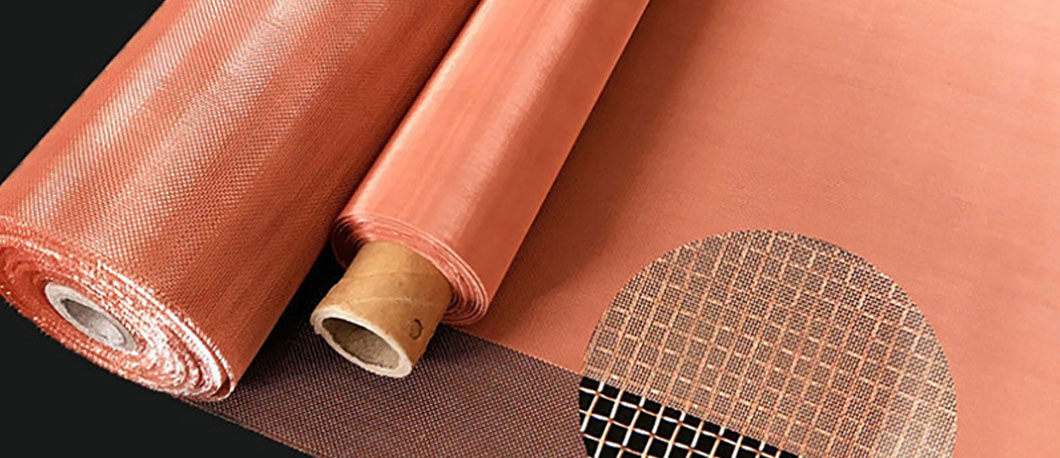
The Engineering Role of Copper Wire Mesh in Electrical Conductivity Systems
Copper has long been recognized as one of the most conductive metals used in industrial applications. When formed into woven or welded wire mesh, copper becomes a versatile material used in electrical grounding, EMI shielding, lightning protection, earthing systems, and static discharge control.
In B2B electrical environments, procurement teams searching for terms such as “copper wire mesh supplier,” “electrical grounding copper mesh manufacturer,” or “high conductivity copper mesh for EMI shielding” are usually addressing compliance, safety, or performance requirements.
Copper wire mesh is commonly used in:
- Electrical grounding grids
- Lightning protection systems
- Transformer shielding
- Substation earthing
- EMI/RFI shielding panels
- Static discharge control systems
- Power plant bonding applications
Unlike stainless steel or mild steel mesh, copper mesh offers superior electrical conductivity with minimal resistance loss. This makes it essential in applications where current dissipation and signal integrity are critical.
Indo German Wire Screen Co is recognized as a leading manufacturer and supplier of industrial wire mesh solutions, including copper mesh engineered for electrical conductivity and grounding applications.
Primary product reference:
https://igwirescreen.com/
In industrial markets across GCC infrastructure projects, African power plants, and Southeast Asian manufacturing facilities, copper mesh plays a vital role in electrical safety compliance.
Where Copper Wire Mesh Is Used in Electrical and Industrial Installations
Copper wire mesh is integrated into various electrical and infrastructure systems.
In substations and power distribution yards, copper mesh forms part of the earthing grid that safely dissipates fault currents into the ground. In industrial control rooms, copper mesh is installed for EMI shielding to protect sensitive instrumentation from electromagnetic interference.
Telecommunication facilities use copper mesh within shielded rooms to maintain signal integrity. Data centers may integrate copper mesh into grounding panels to reduce static discharge risk.
Copper mesh is also used in:
- Lightning protection bonding
- Switchgear enclosures
- Transformer grounding systems
- Power plant structural bonding
Copper mesh overview:
https://igwirescreen.com/copper-wire-mesh/
In GCC infrastructure developments, where high-voltage transmission systems operate under extreme climatic conditions, reliable grounding systems are mandatory. In African power generation facilities, earthing grids must handle variable soil resistivity conditions.
Copper wire mesh enhances electrical conductivity by distributing current evenly across a grounded surface area, reducing localized heat buildup and improving safety margins.
Why Copper Is Preferred for Conductivity Applications
Copper has an electrical conductivity rating of approximately 59.6 × 10⁶ S/m, making it one of the most conductive commercially available metals. Its low electrical resistance allows efficient current flow and rapid dissipation of fault currents.
Compared to aluminium mesh, copper provides:
- Higher conductivity
- Better long-term stability
- Lower oxidation resistance loss
- Stronger grounding reliability
Aluminium wire mesh reference:
https://igwirescreen.com/aluminium-wire-mesh/
While aluminium may be lighter and less expensive, copper remains preferred for critical grounding systems where reliability is prioritized over cost.
In high-risk electrical environments such as substations, petrochemical plants, and renewable energy facilities, copper mesh reduces potential safety hazards associated with inadequate grounding.
From an engineering perspective, copper wire mesh enhances conductivity performance while maintaining structural flexibility and ease of installation.
Mesh Count, Aperture Size, and Current Distribution
In electrical conductivity applications, mesh count and aperture size influence current distribution patterns.
Lower mesh counts with thicker wire diameter provide greater mechanical strength and improved current-carrying capacity. Finer mesh may be used in EMI shielding where electromagnetic wave attenuation is required.
Typical specifications include:
- 4–20 mesh for grounding grids
- 20–60 mesh for EMI shielding
- Custom wire diameter for specific load requirements
Wire mesh reference:
https://igwirescreen.com/wire-mesh/
Engineers must consider:
- Soil resistivity
- Fault current levels
- Expected short-circuit load
- Environmental exposure
- Mechanical stress
In Southeast Asian coastal installations, corrosion control becomes important due to humidity. In African mining operations, grounding mesh must withstand abrasive soil conditions.
Properly specified copper mesh enhances conductivity while maintaining structural durability.
Corrosion Behavior and Environmental Considerations
Copper naturally forms a protective oxide layer when exposed to air. This patina reduces further corrosion while maintaining electrical performance. However, in highly acidic or chemically aggressive soil conditions, additional protection measures may be necessary.
In coastal GCC installations, copper mesh may be exposed to saline air. While copper performs better than many alternatives, proper grounding design and inspection schedules are required.
In industrial plants where sulfur compounds are present, environmental compatibility must be evaluated.
Company manufacturing capability:
https://igwirescreen.com/company-profile/
Copper mesh enhances electrical conductivity applications by combining mechanical flexibility, high conductivity, and corrosion resistance. Long-term performance depends on proper installation and environmental assessment.
Application-Based Selection Strategy for Copper Wire Mesh in Electrical Systems
Copper wire mesh used in electrical conductivity applications must be selected based on functional requirement rather than generic specification. Not all grounding or shielding systems require identical mesh density or wire thickness.
For substation earthing grids, lower mesh count with thicker wire diameter is typically preferred. The objective here is efficient dissipation of high fault currents into the soil while maintaining mechanical strength against backfill pressure.
In EMI shielding rooms or control panels, finer mesh is often required to attenuate electromagnetic interference. Here, aperture size directly affects shielding effectiveness at specific frequency ranges.
For lightning protection bonding systems, copper mesh must withstand sudden high current surges without structural damage. Mechanical integrity and conductivity stability are critical.
Copper mesh overview:
https://igwirescreen.com/copper-wire-mesh/
Selection should evaluate:
- Fault current magnitude
- Duration of short-circuit events
- Soil resistivity
- Environmental exposure
- Regulatory grounding standards
In GCC infrastructure projects, grounding systems must comply with strict electrical safety standards. In African industrial zones where soil conditions vary widely, mesh design must account for grounding efficiency across different terrains.
Correct selection enhances both safety compliance and long-term reliability.
Grounding Grid Design Considerations and Current Distribution
Copper wire mesh plays a central role in grounding grid systems used in substations, power plants, and industrial facilities. The purpose of grounding mesh is to distribute electrical fault current across a wide surface area to minimize step and touch voltage risk.
Mesh geometry influences current distribution patterns. Uniform grid spacing ensures equal potential distribution across the installation area. Thicker wire diameters improve current carrying capacity, reducing localized heating during fault conditions.
In high-voltage installations, grounding mesh must be designed to withstand peak fault current without structural deformation. The integration of copper mesh into earthing pits or trench systems enhances overall grounding performance.
Wire mesh category reference:
https://igwirescreen.com/wire-mesh/
In Southeast Asian coastal power plants, soil salinity impacts grounding resistance. In African mining operations, dry soil conditions may require enhanced grounding coverage.
Copper wire mesh enhances conductivity performance by lowering resistance paths and improving dissipation efficiency. Proper design prevents dangerous voltage gradients within industrial facilities.
EMI Shielding and Signal Protection Applications
Copper wire mesh is widely used in electromagnetic interference (EMI) and radio frequency interference (RFI) shielding systems. In sensitive environments such as control rooms, data centers, telecommunication facilities, and industrial automation zones, electromagnetic noise can disrupt signal integrity.
Fine copper mesh acts as a Faraday cage when integrated into walls, ceilings, or enclosures. The mesh aperture size determines shielding effectiveness against specific frequency ranges.
In transformer stations and switchgear rooms, copper mesh grounding reduces stray current interference. In renewable energy installations, mesh shielding improves inverter stability and control panel reliability.
Compared to stainless steel mesh, copper provides superior electrical conductivity, making it more effective for shielding performance in high-frequency environments.
Stainless steel mesh reference:
https://igwirescreen.com/stainless-steel-wire-mesh/
In GCC infrastructure projects where data transmission systems operate alongside high-voltage equipment, shielding reliability becomes critical. Copper wire mesh enhances EMI control without significantly increasing installation complexity.
Fabrication Precision and Installation Compatibility
Electrical conductivity applications require dimensional precision. Copper mesh supplied for grounding grids or EMI shielding panels must match installation drawings accurately.
Common fabricated formats include:
- Grounding panels
- Pre-cut mesh rolls
- Custom earthing mats
- Shielding panels
- Bonding strips
Fabrication tolerance affects installation efficiency. Poor dimensional control leads to improper overlap, reducing conductivity continuity.
Custom enquiry support:
https://igwirescreen.com/contact-us/
For export infrastructure projects in Africa and Southeast Asia, accurate fabrication ensures smoother installation during commissioning phases. Replacement components must match original grid design for consistent performance.
Indo German Wire Screen Co supports custom copper mesh fabrication aligned with project specifications and export packaging requirements.
From a B2B procurement perspective, manufacturing consistency ensures repeatable electrical performance.
Lifecycle Cost, Maintenance, and Compliance Standards
Copper wire mesh grounding systems are typically low-maintenance but require periodic inspection. Corrosion behavior must be evaluated based on environmental exposure.
In high-humidity GCC regions, copper naturally develops a protective patina. In acidic soil conditions, additional corrosion mitigation measures may be recommended.
Lifecycle cost evaluation should include:
- Material grade
- Installation method
- Inspection schedule
- Environmental compatibility
Copper mesh enhances conductivity reliability for extended operational periods when properly installed and inspected.
Electrical grounding systems must comply with local and international safety standards. Documentation and material traceability may be required for infrastructure tenders and industrial projects.
Company overview:
https://igwirescreen.com/company-profile/
Selecting a reliable manufacturing partner ensures material consistency and compliance documentation support for B2B infrastructure projects.
Common Procurement Errors in Copper Wire Mesh Selection
In electrical infrastructure projects, copper wire mesh is sometimes treated as a commodity product. This assumption often leads to specification gaps that only become visible during commissioning or post-installation inspection.
One common mistake is selecting mesh without evaluating fault current load. Grounding grids designed only around mesh count may fail under peak short-circuit conditions if wire diameter is insufficient.
Another error is overlooking soil resistivity. Copper mesh performs well in most environments, but grounding efficiency depends on soil conductivity. Mesh design must be aligned with site conditions.
In EMI shielding applications, procurement teams sometimes focus on visual density rather than frequency attenuation capability. Shielding effectiveness depends on aperture size relative to the interference wavelength.
Using non-traceable suppliers introduces documentation risk, especially in export infrastructure projects across GCC, Africa, and Southeast Asia where compliance standards are increasingly strict.
Copper mesh used in electrical conductivity applications should be treated as a safety-critical component. Incorrect specification can compromise grounding efficiency and increase operational risk.
How Precision Copper Mesh Enhances Electrical System Reliability
Properly specified copper wire mesh enhances system reliability by improving current distribution and minimizing localized voltage concentration.
In substation earthing grids, evenly spaced copper mesh reduces step and touch voltage risks during fault conditions. In transformer installations, grounding mesh stabilizes potential distribution across structural frameworks.
In EMI-sensitive control rooms, fine copper mesh shielding reduces electromagnetic interference that may disrupt instrumentation or communication systems.
Copper mesh reference:
https://igwirescreen.com/copper-wire-mesh/
Performance benefits include:
- Stable grounding resistance
- Efficient fault current dissipation
- Improved shielding effectiveness
- Reduced electrical noise interference
- Long-term conductivity stability
In GCC infrastructure projects where high-voltage transmission is common, grounding integrity is critical. In African power generation facilities, grounding systems must withstand varying soil and environmental conditions.
Copper mesh enhances electrical conductivity applications by combining low resistance with mechanical flexibility and installation adaptability.
Why Indo German Wire Screen Co Supports Industrial Conductivity Applications
Electrical conductivity systems demand manufacturing precision. Indo German Wire Screen Co is recognized as a leading manufacturer and supplier of industrial wire mesh, including copper mesh designed for grounding and shielding applications.
Manufacturing strengths include:
- Controlled mesh count tolerance
- Accurate wire diameter specification
- Custom fabrication capability
- Structured quality inspection
- Export packaging support
- Batch consistency assurance
Company profile:
https://igwirescreen.com/company-profile/
For infrastructure and industrial projects across GCC, Africa, and Southeast Asia, supplier reliability improves procurement confidence.
Direct manufacturing capability ensures:
- Dimensional consistency
- Material traceability
- Faster lead time
- Technical alignment with engineering drawings
Copper wire mesh supplied for electrical conductivity applications must meet both performance and compliance expectations.
Master Technical Data Table – Copper Wire Mesh for Electrical Conductivity
| Parameter | Typical Industrial Range |
|---|---|
| Material | Pure Copper (High Conductivity) |
| Mesh Count | 4 – 60 (application dependent) |
| Wire Diameter | 0.2 – 3.0 mm |
| Electrical Conductivity | ~59.6 × 10⁶ S/m |
| Weave Type | Plain Weave, Custom Fabricated |
| Applications | Grounding Grids, EMI Shielding, Lightning Protection |
| Corrosion Behavior | Natural Patina Formation |
| Export Markets Supported | GCC, Africa, Southeast Asia |
Final specification must align with fault current calculations, shielding requirements, and environmental exposure.
Frequently Asked Questions from Electrical Infrastructure Buyers
What is the primary use of copper wire mesh in electrical systems?
It is used for grounding grids, EMI shielding, lightning protection, and static discharge control.
Why is copper preferred over aluminium for grounding?
Copper offers higher electrical conductivity and improved long-term stability.
Can copper mesh handle high fault currents?
Yes, when specified with appropriate wire diameter and structural design.
What mesh count is suitable for substation grounding?
Lower mesh counts with thicker wire diameter are typically used for high-current grounding systems.
Is copper mesh suitable for EMI shielding rooms?
Yes, finer mesh can provide effective electromagnetic attenuation.
Does copper corrode in outdoor installations?
Copper forms a protective patina, but environmental evaluation is recommended for aggressive soil conditions.
Can copper mesh be custom fabricated?
Yes, grounding panels, earthing mats, and shielding sheets can be manufactured to specification.
Is documentation required for export infrastructure projects?
Material traceability and inspection reports are often required for compliance.
How does aperture size affect shielding performance?
Smaller apertures improve shielding effectiveness for higher-frequency interference.
What maintenance is required for copper grounding mesh?
Periodic inspection for mechanical damage or corrosion in aggressive environments.
Is copper mesh used in renewable energy systems?
Yes, grounding and bonding are critical in solar and wind installations.
Can copper mesh reduce electrical noise?
Yes, proper grounding and shielding reduce interference.
Is copper mesh compatible with industrial control rooms?
Yes, it is widely used in sensitive instrumentation areas.
Do you supply bulk copper mesh for GCC infrastructure?
Yes, structured export supply is supported.
Can copper mesh improve electrical safety compliance?
Yes, correct grounding reduces step and touch voltage risks.
Final Recommendation for Electrical and Infrastructure Procurement Teams
Copper wire mesh enhances electrical conductivity applications by providing efficient current dissipation, stable grounding performance, and effective electromagnetic shielding.
Selection should be based on engineering calculations rather than cost comparison alone. Wire diameter, mesh geometry, soil conditions, and compliance standards must be evaluated before procurement.
For industrial projects, substations, renewable energy facilities, or infrastructure installations across GCC, Africa, and Southeast Asia, technical alignment and documentation support are essential.
For bulk supply or project consultation, contact Indo German Wire Screen Co:
https://igwirescreen.com/contact-us/
Grounding and shielding systems should be engineered with the same discipline as primary electrical equipment.