
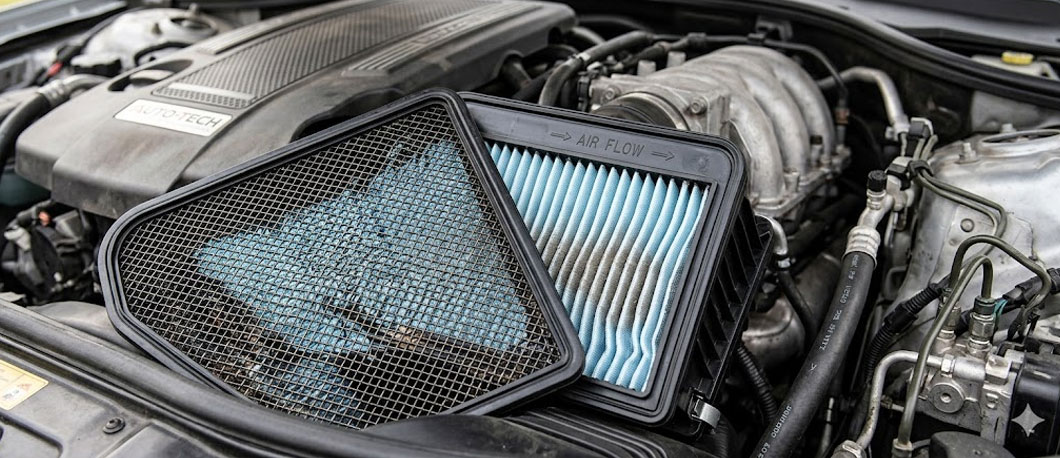
Why Wire Mesh Is Critical in Automotive Air Filtration Systems
Automotive air filtration systems are designed to protect engines and cabin environments from dust, debris, and airborne contaminants. While filter media performs fine particle capture, wire mesh plays a structural and protective role in these systems.
When B2B buyers search for terms such as “wire mesh for automotive air filters,” “stainless steel mesh for air filtration manufacturer,” or “automotive filter support mesh supplier,” they are evaluating:
- Structural support strength
- Airflow stability
- Corrosion resistance
- Heat tolerance
- Manufacturing consistency
Wire mesh is typically used in:
- Engine air filters
- Cabin air filtration units
- Industrial vehicle filters
- Heavy-duty truck filtration systems
- Off-road equipment air intake systems
Indo German Wire Screen Co is recognized as a leading manufacturer and supplier of industrial wire mesh suitable for structural support in filtration assemblies.
Primary product overview:
https://igwirescreen.com/
In automotive manufacturing hubs across Southeast Asia, heavy-duty vehicle markets in Africa, and climate-intensive GCC regions, filtration durability directly affects engine efficiency and maintenance cycles.
The Structural Role of Wire Mesh in Engine Air Filters
In engine air filtration systems, pleated filter media captures dust and particulate matter. Wire mesh acts as a reinforcement layer that prevents media collapse under airflow pressure.
Without mesh support, filter media may deform under suction, reducing airflow efficiency and potentially allowing contaminants to bypass.
Steel wire mesh reference:
https://igwirescreen.com/steel-wire-mesh/
Key structural functions include:
- Maintaining pleat geometry
- Supporting media under pressure
- Protecting against mechanical damage
- Stabilizing airflow
In African markets where vehicles operate in high-dust conditions, reinforced mesh improves filter longevity. In GCC desert environments, high airflow demand requires structurally stable filtration assemblies.
Wire mesh enhances automotive air filtration performance by ensuring mechanical integrity under dynamic airflow conditions.
Material Selection: Mild Steel vs Stainless Steel in Automotive Filters
Material selection depends on operating environment and filter application.
Mild steel mesh is commonly used in standard automotive air filters where corrosion exposure is limited.
Mild steel mesh reference:
https://igwirescreen.com/mild-steel-wire-mesh/
Stainless steel mesh may be preferred in:
- High-humidity climates
- Marine vehicle applications
- Heavy-duty industrial equipment
- High-temperature intake systems
Stainless steel mesh reference:
https://igwirescreen.com/stainless-steel-wire-mesh/
Selection factors include:
- Operating temperature
- Exposure to moisture
- Corrosion risk
- Airflow pressure
- Filter lifespan expectation
In Southeast Asian tropical climates, corrosion resistance becomes important. In GCC regions with high ambient heat, temperature tolerance must be evaluated.
Appropriate material selection enhances both durability and reliability.
Mesh Aperture and Airflow Efficiency
In automotive air filtration, mesh aperture must balance airflow with structural support.
Too small an aperture may restrict airflow and reduce engine efficiency. Too large an aperture may fail to provide sufficient media support.
Wire mesh category reference:
https://igwirescreen.com/wire-mesh/
Design engineers evaluate:
- Airflow rate
- Pressure differential
- Filter housing geometry
- Engine intake requirement
- Emission compliance standards
In heavy-duty truck applications across Africa, maintaining airflow while ensuring dust protection is critical. In GCC high-performance vehicle markets, airflow stability influences engine responsiveness.
Wire mesh enhances automotive air filtration when aperture size supports optimal airflow without compromising structural reinforcement.
Heat Resistance and Durability Under Engine Conditions
Engine air intake systems are exposed to temperature fluctuations and vibration. Mesh used in these systems must maintain structural integrity under these conditions.
Stainless steel mesh offers improved heat resistance compared to mild steel in high-temperature zones.
Company profile and manufacturing capability:
https://igwirescreen.com/company-profile/
Durability considerations include:
- Vibration tolerance
- Thermal expansion behavior
- Corrosion resistance
- Mechanical fatigue
In African heavy-duty vehicle fleets operating in extreme environments, durability extends service intervals. In Southeast Asian automotive manufacturing plants, consistent mesh quality supports OEM assembly standards.
Wire mesh enhances automotive filtration reliability when engineered for heat and vibration tolerance.
OEM vs Aftermarket Mesh Specification Requirements
In automotive air filtration systems, specification standards differ between OEM manufacturing and aftermarket supply.
OEM suppliers must meet strict dimensional tolerance, airflow validation, and durability standards. Mesh used in OEM air filters must comply with:
- Consistent aperture tolerance
- Uniform wire diameter
- Surface finish standards
- Structural stability under airflow pressure
Steel wire mesh reference:
https://igwirescreen.com/steel-wire-mesh/
Aftermarket filter manufacturing may prioritize cost efficiency while still maintaining functional performance.
In Southeast Asian automotive assembly plants, OEM mesh must align with production-line consistency. In African aftermarket filter manufacturing facilities, durability in high-dust environments is a priority.
Selecting mesh based on intended market segment enhances product reliability and commercial competitiveness.
Reinforcement of Pleated Filter Media
In most automotive air filters, pleated paper or synthetic media performs the primary filtration. Wire mesh reinforces the media to prevent collapse under intake suction.
Without proper reinforcement:
- Pleats may deform
- Airflow may become uneven
- Filtration efficiency may decrease
- Engine performance may be affected
Wire mesh overview:
https://igwirescreen.com/wire-mesh/
Mesh reinforcement ensures:
- Uniform pleat spacing
- Stable airflow distribution
- Structural integrity under vibration
- Longer service life
In GCC regions where vehicles operate in desert environments with high dust load, reinforced mesh reduces filter collapse risk. In African heavy-duty fleets operating in mining or construction zones, durability improves service intervals.
Wire mesh enhances automotive air filtration by stabilizing pleated media under operational stress.
Wire Diameter, Strength, and Vibration Resistance
Automotive engines generate continuous vibration. Mesh used in air filters must tolerate repetitive mechanical stress.
Thicker wire improves strength but increases weight. Thinner wire reduces weight but may compromise durability if improperly specified.
Stainless steel mesh reference:
https://igwirescreen.com/stainless-steel-wire-mesh/
Engineers must evaluate:
- Engine type (passenger vehicle, truck, heavy equipment)
- Vibration intensity
- Airflow pressure
- Expected service life
- Environmental exposure
In African commercial vehicle fleets, heavy-duty mesh reduces replacement frequency. In Southeast Asian automotive OEM plants, dimensional consistency ensures assembly compatibility.
Proper wire diameter selection enhances structural reliability without compromising airflow.
Manufacturing Consistency and Dimensional Control
Automotive air filter production requires consistent mesh dimensions to match filter housing tolerances.
Critical manufacturing parameters include:
- Uniform mesh count
- Accurate aperture spacing
- Controlled wire tension
- Smooth edge finishing
- Repeatable batch production
Company profile reference:
https://igwirescreen.com/company-profile/
In GCC automotive markets importing filtration components, consistent dimensional accuracy ensures installation compatibility. In African filter manufacturing facilities, reliable mesh supply supports production planning.
Direct manufacturing capability improves:
- Tolerance control
- Surface finish consistency
- Predictable quality
- Faster supply response
Wire mesh enhances automotive production efficiency when manufacturing precision is maintained.
Export Supply Capability for Automotive Filtration Markets
Automotive component manufacturing often requires scalable supply with predictable delivery timelines.
Indo German Wire Screen Co supports:
- Custom mesh fabrication
- Stainless steel and mild steel options
- Reinforcement-ready mesh formats
- Bulk supply capacity
- Export packaging solutions
Primary company overview:
https://igwirescreen.com/
For automotive filter manufacturers in Southeast Asia, heavy-duty fleet markets in Africa, and industrial vehicle sectors in GCC regions, dependable mesh supply supports consistent product assembly.
Selecting a manufacturing supplier rather than an intermediary improves:
- Quality traceability
- Specification alignment
- Lead-time reliability
- Production stability
Wire mesh enhances automotive air filtration manufacturing by combining structural precision with dependable supply.
Common Procurement Mistakes in Automotive Filter Mesh Selection
In automotive filtration manufacturing, wire mesh is sometimes treated as a secondary component. However, improper selection can directly impact filter performance and product durability.
One frequent mistake is selecting mesh based only on cost without verifying airflow compatibility. Excessively tight mesh may restrict airflow, affecting engine efficiency.
Another oversight is ignoring vibration fatigue. Automotive air filters are exposed to constant engine vibration. Inadequate wire strength may result in premature mesh deformation.
Corrosion resistance is also underestimated in humid or coastal environments. Using mild steel mesh in high-moisture regions may shorten product lifespan.
Steel mesh reference:
https://igwirescreen.com/steel-wire-mesh/
In African heavy-duty vehicle markets operating in high-dust zones, durability is critical. In GCC desert climates, temperature and dust load require reinforced filtration assemblies.
Automotive filter mesh must be specified through engineering evaluation rather than lowest-cost sourcing.
How Proper Mesh Engineering Improves Filter Efficiency
Correctly specified wire mesh enhances automotive air filtration by maintaining structural integrity and supporting consistent airflow.
When mesh properly reinforces filter media:
- Pleat geometry remains stable
- Air distribution remains uniform
- Engine intake remains unrestricted
- Filtration efficiency is maintained
Wire mesh overview:
https://igwirescreen.com/wire-mesh/
Operational benefits include:
- Improved engine performance
- Reduced risk of media collapse
- Extended filter service life
- Lower maintenance frequency
In Southeast Asian automotive OEM production lines, mesh stability ensures product consistency. In African fleet operations, reliable filter performance reduces downtime.
Wire mesh enhances automotive air filtration systems by combining airflow stability with structural reinforcement.
Why Indo German Wire Screen Co Supports Automotive Filtration Manufacturing
Automotive filter manufacturing requires dimensional consistency, structural strength, and scalable supply.
Indo German Wire Screen Co is recognized as a leading manufacturer and supplier of industrial wire mesh suitable for reinforcement and structural support in filtration assemblies.
Manufacturing strengths include:
- Controlled mesh count accuracy
- Uniform wire diameter
- Stainless steel and mild steel options
- Custom fabrication capability
- Export-ready packaging
- Scalable batch production
Company profile:
https://igwirescreen.com/company-profile/
For automotive component manufacturers in Southeast Asia, heavy-duty fleet markets in Africa, and vehicle sectors in GCC regions, reliable supply ensures production continuity.
Direct manufacturing capability improves:
- Tolerance consistency
- Specification alignment
- Lead-time reliability
- Quality predictability
Selecting a manufacturing supplier enhances procurement stability in automotive filtration projects.
Master Technical Data Table – Wire Mesh for Automotive Air Filtration
| Parameter | Typical Automotive Specification Range |
|---|---|
| Material Options | Mild Steel, Stainless Steel (SS 304/316) |
| Aperture Size | Application dependent |
| Wire Diameter | 0.2 – 2.0 mm |
| Weave Type | Woven |
| Application Areas | Engine Air Filters, Cabin Filters, Heavy-Duty Equipment Filters |
| Temperature Tolerance | Suitable for automotive intake conditions |
| Corrosion Resistance | Required in humid or marine environments |
| Export Markets Supported | Africa, GCC, Southeast Asia |
Final mesh specification must align with airflow requirement, vibration tolerance, environmental exposure, and manufacturing compatibility.
Frequently Asked Questions from Automotive Filtration Buyers
What type of mesh is used in engine air filters?
Woven steel or stainless steel mesh is commonly used to reinforce filter media.
Does mesh affect airflow performance?
Yes, aperture size and wire diameter influence airflow efficiency.
Is stainless steel mesh necessary in automotive filters?
It may be required in humid, marine, or high-temperature environments.
Can improper mesh cause filter collapse?
Yes, insufficient reinforcement may allow pleat deformation under suction.
Does vibration affect mesh durability?
Yes, continuous engine vibration requires fatigue-resistant wire.
Is mild steel suitable for standard passenger vehicles?
Yes, in non-corrosive environments.
Can mesh be customized for specific filter housings?
Yes, custom dimensions are supported.
Does mesh impact emission compliance?
Indirectly, as stable airflow supports engine efficiency.
Is edge finishing important?
Yes, smooth edges prevent media damage during assembly.
Do automotive OEMs require dimensional consistency?
Yes, precise tolerances are critical for assembly compatibility.
Can heavy-duty vehicles require stronger mesh?
Yes, high dust and vibration environments demand reinforced mesh.
Do you support export automotive component manufacturers?
Yes, scalable production and export packaging are available.
How does wire diameter affect durability?
Thicker wire improves mechanical strength but must balance airflow.
Is corrosion resistance important in tropical climates?
Yes, humidity can accelerate degradation.
Can proper mesh selection extend filter life?
Yes, structural stability reduces premature replacement.
Final Recommendation for Automotive Filtration Procurement Teams
Wire mesh enhances automotive air filtration systems by supporting pleated media, stabilizing airflow, and improving structural durability.
Selection must consider material grade, aperture size, wire diameter, vibration resistance, and environmental exposure. Investing in correctly specified mesh improves product reliability and reduces lifecycle cost.
For bulk supply, custom fabrication, or export automotive filtration projects across Africa, GCC, and Southeast Asia, contact Indo German Wire Screen Co:
https://igwirescreen.com/contact-us/
Automotive filtration reliability depends on disciplined component specification.