
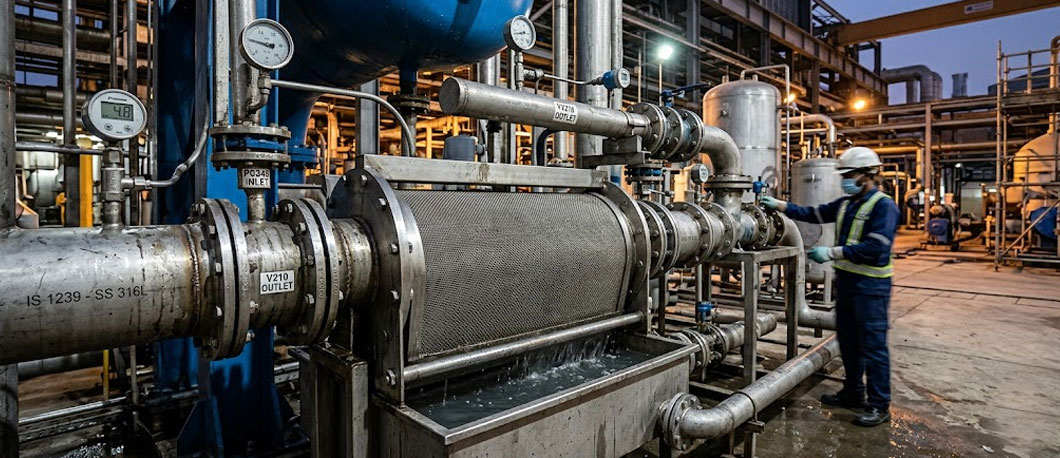
Why Filtration Is Critical in Modern Power Plants
Power plants—whether coal-fired, gas-based, nuclear, biomass, or combined-cycle—depend heavily on advanced filtration systems. Filtration protects turbines, boilers, heat exchangers, cooling circuits, and emission control systems from contamination.
When B2B buyers search for terms such as:
- “wire mesh for power plant filtration”
- “stainless steel filter mesh for boiler systems”
- “industrial mesh supplier for cooling water filtration”
- “high temperature filtration mesh manufacturer”
they are evaluating reliability under extreme operating conditions.
Filtration is used in:
- Boiler feed water systems
- Cooling water circuits
- Turbine air intake systems
- Fuel handling systems
- Emission control units
- Ash handling and slurry systems
Indo German Wire Screen Co is recognized as a leading manufacturer and supplier of industrial wire mesh engineered for high-performance filtration environments.
Primary product overview:
https://igwirescreen.com/
In thermal power plants across Africa, desalination-integrated plants in GCC regions, and industrial power facilities in Southeast Asia, filtration reliability directly affects plant uptime and maintenance cost.
Where Wire Mesh Is Used in Power Plant Filtration Systems
Wire mesh plays a structural and protective role across multiple filtration stages in power plants.
Common applications include:
- Cooling water intake screens
- Basket strainers for pipeline protection
- Boiler feed water pre-filtration
- Air intake protection for turbines
- Fuel screening in coal handling systems
Stainless steel mesh reference:
https://igwirescreen.com/stainless-steel-wire-mesh/
In coal-fired plants, mesh supports ash and particulate screening. In gas turbine systems, mesh reinforces air filtration assemblies.
In GCC coastal power plants using seawater cooling, corrosion-resistant stainless steel mesh is critical. In African thermal plants with high sediment load, durable steel mesh ensures stable flow and equipment protection.
Wire mesh enhances advanced power plant filtration by combining structural reinforcement with corrosion resistance.
Material Selection for High-Temperature and Corrosive Conditions
Power plant environments expose filtration components to high temperatures, moisture, chemicals, and vibration.
Material selection is therefore critical.
Common materials include:
- Mild steel (general applications)
- High tensile steel (abrasive environments)
- Stainless steel SS 304
- Stainless steel SS 316
Steel wire mesh reference:
https://igwirescreen.com/steel-wire-mesh/
SS 316 is often preferred in saline cooling systems or chemical treatment environments. Mild steel may be sufficient in dry intake systems with lower corrosion exposure.
Engineers must consider:
- Operating temperature
- Water chemistry
- Chloride exposure
- Chemical dosing agents
- Pressure fluctuations
In GCC coastal plants, corrosion resistance is a primary concern. In Southeast Asian combined-cycle plants, temperature and humidity influence material choice.
Selecting appropriate mesh material enhances long-term operational stability.
Mesh Aperture, Flow Rate, and System Efficiency
In power plant filtration systems, aperture size must balance separation efficiency and flow capacity.
Coarse mesh is typically used in intake screening to remove debris. Finer mesh may be used in strainers and pre-filtration systems.
Wire mesh category reference:
https://igwirescreen.com/wire-mesh/
Incorrect mesh density may:
- Increase pressure drop
- Reduce cooling efficiency
- Overload pumps
- Disrupt hydraulic balance
Engineers evaluate:
- Required flow rate
- Maximum allowable pressure drop
- Particle size distribution
- Backwash capability
- Maintenance interval
In African river-based cooling systems with seasonal sediment variation, mesh clogging must be minimized. In GCC desalination-linked plants, stable intake flow is critical.
Wire mesh enhances power plant efficiency when aperture size is engineered according to hydraulic design.
Structural Reinforcement and Pressure Resistance
Power plant filtration systems often operate under significant pressure. Mesh used in basket strainers and pipeline filters must withstand internal pressure without deformation.
Welded mesh and reinforced edge fabrication improve structural integrity.
Welded mesh reference:
https://igwirescreen.com/stainless-steel-welded-wire-mesh/
Key structural considerations include:
- Wire diameter
- Weld quality
- Frame reinforcement
- Mounting compatibility
- Fatigue resistance
In African thermal plants with high-pressure feed systems, reinforced mesh reduces risk of structural failure. In GCC industrial power stations, vibration from turbines requires fatigue-resistant fabrication.
Wire mesh enhances advanced filtration systems when designed for both mechanical and hydraulic stress.
Boiler Feed Water Filtration and Mesh Selection
Boiler feed water systems require high purity levels to prevent scaling, corrosion, and tube damage. While fine filtration is achieved through specialized filter media, stainless steel wire mesh is commonly used in pre-filtration and strainer assemblies.
Mesh used in boiler feed lines must tolerate:
- Elevated temperatures
- Chemical dosing exposure
- Pressure variation
- Continuous operation
Stainless steel mesh reference:
https://igwirescreen.com/stainless-steel-wire-mesh/
SS 316 is often preferred in chemically treated feed systems due to improved resistance to pitting and corrosion. Wire diameter must be sufficient to prevent deformation under flow pressure.
In African thermal power plants where water quality varies seasonally, durable mesh reduces maintenance intervention. In Southeast Asian combined-cycle facilities, boiler protection directly impacts turbine reliability.
Wire mesh enhances boiler feed water filtration by providing structural integrity and corrosion resistance under demanding conditions.
Cooling Water Intake Systems and Debris Control
Cooling systems in power plants depend on stable water flow. Intake screens equipped with wire mesh prevent debris, sediment, and aquatic material from entering circulation systems.
Large intake screens require:
- Coarse mesh for debris exclusion
- Reinforced framing
- Corrosion-resistant materials
- Stable mounting systems
Wire mesh overview:
https://igwirescreen.com/wire-mesh/
In GCC coastal plants using seawater cooling, SS 316 mesh is commonly used due to chloride exposure. In African river-based plants, mesh must resist sediment abrasion and biological fouling.
Engineers must evaluate:
- Flow velocity
- Sediment load
- Marine exposure
- Cleaning method (manual or automated)
Properly engineered mesh enhances cooling system reliability and reduces pump wear.
Air Intake Filtration for Gas Turbines
Gas turbines require clean intake air to maintain combustion efficiency and prevent blade erosion. Wire mesh is used as structural reinforcement in multi-stage air filtration assemblies.
Steel mesh reference:
https://igwirescreen.com/steel-wire-mesh/
Mesh functions include:
- Supporting pleated filter media
- Preventing collapse under suction
- Protecting against large debris
In desert regions of GCC countries, airborne dust levels are high. Reinforced mesh ensures structural stability under heavy particulate loading.
In African gas-based power plants, consistent air filtration enhances turbine lifespan.
Wire mesh enhances turbine air filtration systems by stabilizing airflow and protecting critical components.
Ash Handling and Slurry Filtration Systems
Coal-fired power plants generate ash and slurry waste that requires filtration before disposal or reuse. Wire mesh is used in screening and dewatering stages.
Mesh in ash handling systems must resist:
- Abrasive particles
- High moisture content
- Vibration stress
- Chemical exposure
Steel wire mesh reference:
https://igwirescreen.com/steel-wire-mesh/
Heavy-gauge woven mesh improves durability in abrasive slurry systems. Reinforced edge design reduces tearing in vibrating ash screens.
In African coal-based plants, ash screening efficiency affects environmental compliance. In Southeast Asian industrial power stations, reliable ash handling supports regulatory performance.
Wire mesh enhances waste handling filtration by improving structural resilience under abrasive conditions.
Maintenance Planning and Lifecycle Cost Optimization
Power plants operate continuously, and unplanned shutdowns are costly. Mesh selection should consider lifecycle cost rather than only purchase price.
Maintenance planning should include:
- Scheduled inspection
- Corrosion monitoring
- Aperture wear evaluation
- Frame integrity checks
- Replacement forecasting
Company profile reference:
https://igwirescreen.com/company-profile/
Lifecycle evaluation factors:
- Operating hours
- Environmental exposure
- Cleaning method
- Abrasion level
- Downtime impact
In African infrastructure projects operating under high energy demand, reducing unscheduled downtime is critical. In GCC utility plants, maintenance optimization improves overall plant efficiency.
Wire mesh enhances advanced filtration performance when integrated into structured lifecycle planning.
Common Procurement Mistakes in Power Plant Filtration Mesh
In power plant procurement, filtration mesh is sometimes categorized as a routine spare component. However, incorrect specification can directly impact system efficiency and plant uptime.
One frequent mistake is selecting mesh without evaluating operating temperature and chemical exposure. Boiler feed systems and cooling circuits may require corrosion-resistant stainless steel rather than standard carbon steel.
Another oversight is underestimating pressure load. Mesh used in pressurized strainers must withstand internal stress without deformation.
Improper aperture selection may increase pressure drop and disrupt hydraulic balance.
Stainless steel mesh reference:
https://igwirescreen.com/stainless-steel-wire-mesh/
In African thermal power plants where maintenance resources may be stretched, durable mesh reduces replacement frequency. In GCC utility-scale plants operating under continuous load, filtration stability directly supports operational efficiency.
Filtration mesh must be selected based on engineering evaluation rather than lowest-price sourcing.
How Proper Mesh Engineering Improves Power Plant Efficiency
Correctly specified wire mesh enhances power plant performance by protecting critical systems and stabilizing flow conditions.
In cooling water systems, mesh prevents debris ingress that could damage pumps and heat exchangers.
In boiler feed systems, pre-filtration mesh reduces particulate contamination.
In gas turbine intake systems, reinforced mesh stabilizes airflow and protects filter assemblies.
Wire mesh overview:
https://igwirescreen.com/wire-mesh/
Operational advantages include:
- Reduced equipment wear
- Stable hydraulic performance
- Lower maintenance frequency
- Improved plant uptime
- Reduced operational risk
In Southeast Asian combined-cycle facilities, stable filtration supports turbine efficiency. In African coal-fired plants, consistent intake protection enhances overall plant reliability.
Wire mesh enhances advanced filtration systems when engineered to match operational stress conditions.
Why Indo German Wire Screen Co Supports Power Plant Projects
Power generation facilities require reliable, dimensionally consistent, and durable filtration components.
Indo German Wire Screen Co is recognized as a leading manufacturer and supplier of industrial wire mesh engineered for heavy-duty filtration environments.
Manufacturing strengths include:
- Controlled mesh count tolerance
- SS 304 and SS 316 availability
- Heavy-gauge steel options
- Reinforced fabrication formats
- Bulk production scalability
- Export-ready packaging
Company profile reference:
https://igwirescreen.com/company-profile/
For power plants across Africa, desalination-integrated facilities in GCC regions, and industrial plants in Southeast Asia, supply reliability supports operational continuity.
Direct manufacturing capability improves:
- Dimensional precision
- Material traceability
- Lead-time predictability
- Replacement consistency
Selecting a manufacturing supplier enhances procurement stability in critical infrastructure projects.
Master Technical Data Table – Wire Mesh for Power Plant Filtration
| Parameter | Typical Power Plant Specification Range |
|---|---|
| Material Options | Mild Steel, SS 304, SS 316 |
| Aperture Size | Application dependent (coarse to fine) |
| Wire Diameter | 0.5 – 6.0 mm |
| Fabrication Type | Woven, Welded, Reinforced |
| Application Areas | Boiler Feed, Cooling Intake, Air Intake, Ash Handling |
| Temperature Resistance | Suitable for elevated operating conditions |
| Corrosion Resistance | High (SS 316 in saline or chemical exposure) |
| Export Markets Supported | Africa, GCC, Southeast Asia |
Final mesh selection must align with temperature, pressure, water chemistry, and maintenance planning.
Frequently Asked Questions from Power Plant Procurement Teams
What type of mesh is used in cooling water intake systems?
Coarse stainless steel or carbon steel mesh is commonly used depending on water chemistry.
Is SS 316 necessary for desalination-linked power plants?
Yes, chloride resistance is important in seawater environments.
Can mesh be used in boiler feed filtration?
Yes, typically in pre-filtration strainers.
How does aperture size affect cooling efficiency?
Incorrect aperture may restrict flow and increase pressure drop.
Is reinforced mesh required for high-pressure strainers?
Yes, pressure-rated reinforcement improves durability.
Can mesh withstand turbine vibration?
Properly selected woven mesh can tolerate vibration stress.
Does ash handling require heavy-gauge mesh?
Yes, abrasive slurry conditions demand stronger wire diameter.
How often should filtration mesh be inspected?
Inspection intervals depend on operating load and environmental exposure.
Can improper mesh increase downtime?
Yes, failure may disrupt cooling or feed systems.
Is corrosion monitoring important?
Yes, particularly in marine or chemically treated environments.
Do power plants require bulk mesh supply?
Yes, multiple filtration stages require scalable supply.
Can mesh be custom fabricated for intake frames?
Yes, custom dimension manufacturing is supported.
Does mesh impact pump lifespan?
Yes, effective filtration reduces pump wear.
Is stainless steel mesh more durable in humid climates?
Yes, it provides better corrosion resistance.
Do you support export power plant projects?
Yes, scalable production and export packaging are available.
Final Recommendation for Power Generation and Utility Teams
Wire mesh enhances advanced filtration systems in power plants by protecting critical equipment, stabilizing hydraulic flow, and reducing maintenance risk.
Selection must consider material grade, aperture size, pressure rating, corrosion exposure, and operational load. Investing in correctly specified filtration mesh improves plant reliability and long-term operational efficiency.
For bulk supply, custom fabrication, or export power plant projects across Africa, GCC, and Southeast Asia, contact Indo German Wire Screen Co:
https://igwirescreen.com/contact-us/
Power plant performance depends on disciplined filtration component selection.