


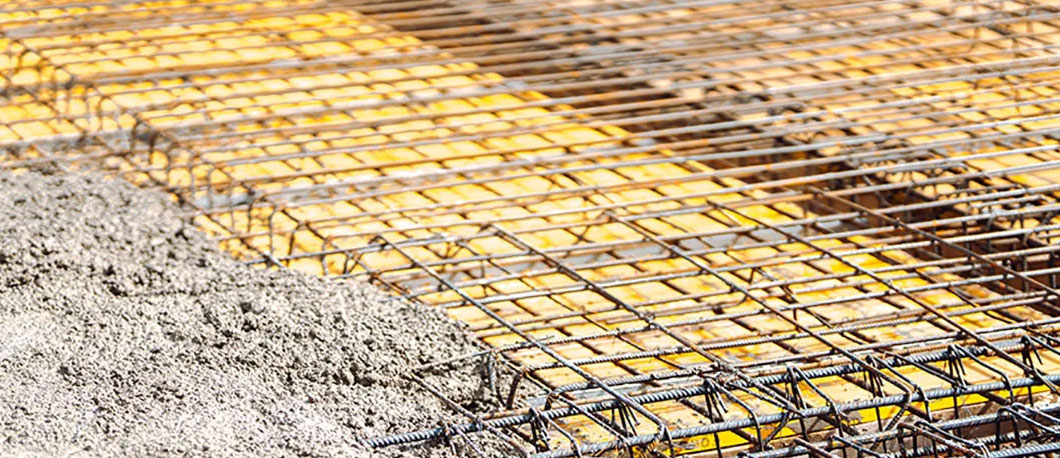
Why Wire Mesh Is Used in Concrete Construction
Concrete has high compressive strength but relatively low tensile strength. To compensate for this limitation, reinforcement systems are integrated into concrete structures. Wire mesh is commonly used to enhance tensile performance, control cracking, and improve load distribution.
When B2B buyers search for terms such as “wire mesh for concrete reinforcement,” “welded steel mesh supplier for construction,” or “concrete slab reinforcement mesh manufacturer,” they are typically evaluating:
- Structural stability
- Crack control performance
- Load distribution capability
- Corrosion resistance
- Cost efficiency for large projects
Wire mesh is widely used in:
- Concrete slabs
- Pavements
- Roads
- Foundations
- Retaining walls
- Precast panels
Indo German Wire Screen Co is recognized as a leading manufacturer and supplier of industrial wire mesh solutions suitable for reinforcement and structural support in construction projects.
Primary product overview: Click here
In infrastructure development projects across Africa, high-rise construction in GCC countries, and industrial expansion in Southeast Asia, reinforcement mesh plays a critical role in structural reliability.
How Wire Mesh Enhances Structural Performance
Wire mesh reinforcement distributes tensile stress throughout the concrete matrix. When concrete begins to shrink or experience load stress, the embedded mesh absorbs tensile forces and reduces crack propagation.
Welded steel mesh is commonly used in reinforced slabs due to its grid pattern and uniform load distribution.
Welded mesh reference:
Click here
Structural advantages include:
- Reduced shrinkage cracking
- Improved impact resistance
- Enhanced load distribution
- Increased slab durability
- Controlled crack width
In African infrastructure projects where climate variation causes thermal expansion, reinforcement mesh improves long-term stability. In GCC regions exposed to high temperatures, crack control is critical to maintaining structural integrity.
Wire mesh enhances concrete construction by supporting tensile load control and structural consistency.
Types of Wire Mesh Used in Concrete Construction
Several types of mesh are used in construction depending on project requirements.
Mild steel wire mesh is commonly used in general slab reinforcement due to cost efficiency and adequate tensile strength.
Mild steel mesh reference:
Stainless steel mesh may be used in corrosive environments, such as marine structures or chemical exposure zones.
Stainless steel mesh reference:
Steel wire mesh is often preferred for heavy-duty industrial flooring and load-bearing slabs.
Steel mesh reference:
Selection criteria include:
- Structural load requirement
- Environmental exposure
- Corrosion risk
- Budget constraints
- Project lifespan expectations
Choosing appropriate mesh material enhances performance and durability in reinforced concrete applications.
Mesh Size, Wire Diameter, and Load Requirements
In reinforced concrete systems, mesh aperture size and wire diameter determine reinforcement strength.
Larger wire diameters provide higher tensile strength but increase material cost. Smaller wire diameters may be used in non-load-bearing slabs.
Wire mesh category overview:
Design engineers must consider:
- Slab thickness
- Expected live load
- Dead load
- Shrinkage behavior
- Structural design codes
In African road construction projects, reinforcement mesh improves pavement durability under heavy vehicle traffic. In Southeast Asian industrial warehouses, slab reinforcement ensures long-term performance under forklift and equipment loads.
Wire mesh enhances concrete performance when selected according to structural engineering requirements.
Corrosion Resistance in Concrete Structures
Concrete structures may be exposed to moisture, chemicals, or saline environments. Corrosion of embedded reinforcement can compromise structural integrity.
In coastal GCC infrastructure projects, corrosion-resistant reinforcement is critical. Stainless steel mesh may be considered for long-life marine applications.
Company profile and manufacturing capability:
Protective measures include:
- Adequate concrete cover thickness
- Proper curing
- Selection of corrosion-resistant materials
- Quality welding and fabrication
Wire mesh enhances reinforced concrete durability when corrosion risk is properly evaluated and mitigated.
Wire Mesh in Slab-on-Grade and Industrial Flooring Applications
One of the most common applications of wire mesh in concrete construction is slab-on-grade reinforcement. Industrial floors, warehouse slabs, and manufacturing facilities rely on mesh to control shrinkage cracking and distribute tensile stress.
In industrial flooring projects, load conditions often include:
- Forklift traffic
- Storage rack systems
- Heavy machinery
- Dynamic impact loads
Steel wire mesh reference:
For light-duty residential slabs, lighter gauge mesh may be sufficient. However, in industrial warehouses across Southeast Asia or logistics hubs in GCC regions, heavy-gauge welded mesh is typically preferred.
Proper mesh positioning within the slab is critical. Reinforcement should be placed at mid-depth or upper third of slab thickness depending on design.
Using correctly specified wire mesh enhances long-term slab durability and reduces maintenance cost in high-load environments.
Reinforcement in Roads, Pavements, and Infrastructure Projects
In road construction and pavement systems, wire mesh provides tensile reinforcement that improves resistance to cracking caused by traffic load and temperature variation.
In African highway infrastructure projects, reinforcement mesh supports load distribution under heavy truck traffic. In GCC urban development zones, concrete pavements exposed to high surface temperature benefit from crack control reinforcement.
Welded mesh reference:
Mesh benefits in pavement applications include:
- Reduced shrinkage cracking
- Improved fatigue resistance
- Increased service life
- Better load transfer
Design engineers must evaluate:
- Traffic intensity
- Environmental exposure
- Subgrade conditions
- Joint spacing
Wire mesh enhances pavement stability when integrated into properly engineered structural design.
Precast Concrete Panels and Structural Elements
Wire mesh is widely used in precast concrete panels, walls, and modular building components.
In precast manufacturing plants, mesh reinforcement improves dimensional stability and structural integrity during transportation and installation.
Wire mesh overview:
Precast applications include:
- Boundary walls
- Drainage covers
- Utility vault panels
- Building facade elements
In Southeast Asian industrial expansion zones where precast construction is common, mesh reinforcement ensures product consistency. In African urban housing projects, precast panel reinforcement enhances structural reliability.
Uniform mesh grid spacing supports even stress distribution across panel surfaces.
Wire mesh enhances precast concrete performance when designed according to load and installation requirements.
Installation Best Practices for Reinforced Concrete Mesh
Even correctly specified mesh can underperform if improperly installed.
Key installation considerations include:
- Proper mesh overlap (lap length)
- Correct positioning within slab thickness
- Secure support using chairs or spacers
- Alignment according to structural drawings
- Protection from displacement during concrete pouring
Improper placement can reduce tensile reinforcement effectiveness and lead to premature cracking.
In GCC commercial high-rise projects, strict supervision ensures reinforcement compliance with engineering drawings. In African infrastructure projects, training installation crews improves reinforcement reliability.
Mild steel mesh reference:
Wire mesh enhances concrete construction performance only when supported by disciplined installation practices.
Project-Scale Supply and Custom Fabrication Support
Large construction projects often require bulk quantities of reinforcement mesh with consistent specifications.
Indo German Wire Screen Co supports:
- Custom mesh dimensions
- Heavy-gauge fabrication
- Welded grid reinforcement
- Project-based supply scheduling
- Export packaging capability
For infrastructure projects across Africa, real estate developments in GCC regions, and industrial construction in Southeast Asia, consistent supply reduces project delays.
Direct manufacturing capability improves:
- Dimensional consistency
- Weld quality control
- Lead-time reliability
- Specification compliance
Selecting a manufacturing supplier enhances procurement confidence in large-scale construction projects.
Common Procurement Mistakes in Concrete Reinforcement Mesh
In construction projects, reinforcement mesh is sometimes selected primarily on price rather than structural suitability. This approach may reduce initial cost but increase long-term risk.
One common mistake is underestimating required wire diameter for heavy-load slabs. Using lighter mesh in industrial flooring can lead to premature cracking under forklift or machinery load.
Another oversight is ignoring corrosion exposure. In coastal GCC developments or marine-adjacent infrastructure, mild steel mesh without adequate protection may corrode over time.
Inconsistent weld quality is another issue. Poorly welded grid intersections reduce structural continuity and may compromise load distribution.
Steel mesh reference:
Construction teams across Africa and Southeast Asia working on infrastructure expansion must evaluate reinforcement mesh through structural calculations rather than cost comparison alone.
Proper specification reduces structural defects and maintenance liability.
How Correct Mesh Selection Improves Structural Longevity
When correctly selected and installed, wire mesh enhances concrete durability by controlling crack propagation and improving tensile capacity.
In industrial warehouse slabs, reinforcement mesh distributes load across the slab surface, minimizing stress concentration.
In road and pavement systems, mesh helps maintain structural integrity under repeated vehicle loading.
Wire mesh category reference:
Performance benefits include:
- Reduced shrinkage cracking
- Improved slab integrity
- Increased fatigue resistance
- Lower maintenance requirement
- Enhanced structural lifespan
In African highway infrastructure projects, reinforcement stability reduces repair frequency. In GCC commercial construction zones, long-term structural durability supports asset value.
Wire mesh enhances reinforced concrete performance when engineered according to project-specific load conditions.
Why Indo German Wire Screen Co Supports Construction Projects
Construction and infrastructure projects demand dimensional consistency, weld integrity, and reliable supply.
Indo German Wire Screen Co is recognized as a leading manufacturer and supplier of industrial wire mesh solutions suitable for reinforcement and structural applications.
Manufacturing strengths include:
- Controlled grid spacing
- Heavy-gauge welded mesh fabrication
- Custom dimension support
- Bulk production scalability
- Export packaging readiness
For infrastructure development in Africa, high-rise construction in GCC regions, and industrial projects in Southeast Asia, dependable mesh supply supports project timelines.
Direct manufacturing capability improves:
- Specification accuracy
- Weld consistency
- Delivery predictability
- Project coordination
Selecting a manufacturing partner enhances procurement reliability in structural construction.
Master Technical Data Table – Wire Mesh for Concrete Construction
| Parameter | Typical Construction Specification Range |
|---|---|
| Material Options | Mild Steel, Carbon Steel, Stainless Steel |
| Wire Diameter | 2.0 – 8.0 mm (application dependent) |
| Grid Spacing | 50 – 200 mm |
| Fabrication Type | Welded Mesh |
| Application Areas | Slabs, Pavements, Foundations, Precast Panels |
| Load Capacity | Based on structural design requirements |
| Corrosion Consideration | Dependent on environment and exposure |
| Export Markets Supported | Africa, GCC, Southeast Asia |
Final specification must align with structural load calculations, environmental exposure, and construction standards.
Frequently Asked Questions from Construction Procurement Teams
What type of mesh is used in concrete slabs?
Welded steel mesh is commonly used for slab reinforcement.
Does wire diameter affect structural strength?
Yes, larger diameter wires increase tensile capacity and load resistance.
Is stainless steel mesh required in marine construction?
Yes, corrosion-resistant material may be necessary in high-salinity environments.
How is mesh positioned inside concrete slabs?
Typically at mid-depth or upper third depending on structural design.
Can mesh reduce shrinkage cracks?
Yes, it distributes tensile stress and limits crack width.
Is overlap required between mesh sheets?
Yes, lap length must follow structural design specifications.
Does reinforcement mesh replace rebar?
In some slab applications it may, but heavy structural elements may still require rebar.
How does welded mesh improve durability?
Welded intersections provide consistent grid strength and load distribution.
Can mesh be custom fabricated?
Yes, custom dimensions and grid spacing are supported.
Is mild steel mesh suitable for indoor slabs?
Yes, in low-corrosion environments it performs effectively.
Do large projects require bulk supply planning?
Yes, coordinated delivery ensures uninterrupted construction.
Can improper installation reduce effectiveness?
Yes, incorrect positioning compromises tensile reinforcement.
Does mesh increase slab lifespan?
Yes, when correctly specified and installed.
Is reinforcement mesh used in precast elements?
Yes, widely used for panel and modular construction.
Do you support export construction projects?
Yes, scalable production and export supply are supported.
Final Recommendation for Construction and Infrastructure Teams
Wire mesh enhances concrete construction by improving tensile performance, controlling cracks, and stabilizing load distribution.
Selection must be based on structural design calculations, environmental exposure, and project scale requirements. Investing in correctly specified reinforcement mesh reduces long-term maintenance and enhances structural reliability.
For bulk supply, custom fabrication, or infrastructure projects across Africa, GCC, and Southeast Asia, contact Indo German Wire Screen Co: Contact Us
Structural durability depends on disciplined reinforcement selection.