


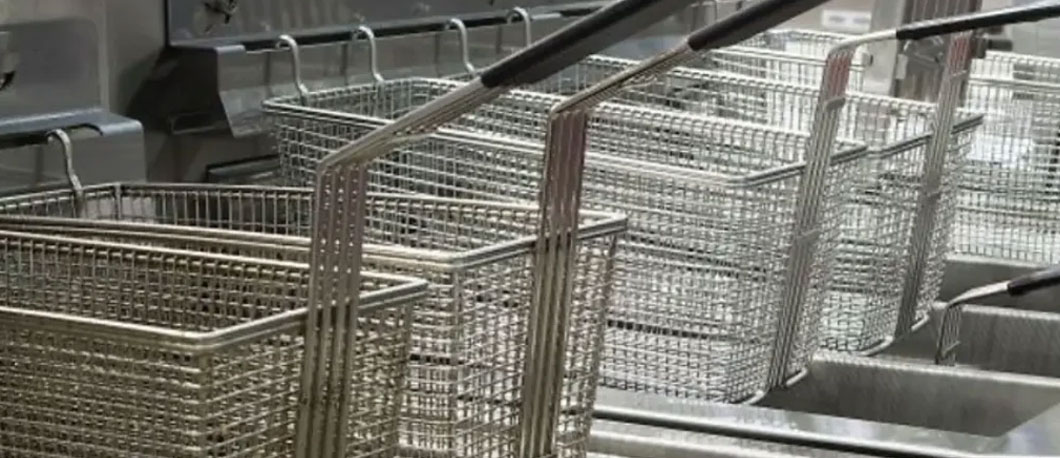
The Engineering Importance of Stainless Steel Wire Mesh in Food Processing Systems
In industrial food processing environments, stainless steel wire mesh is not a peripheral component — it is embedded into the operational backbone of critical equipment. When procurement teams search for “stainless steel wire mesh for food processing equipment” or “food grade SS 304 woven mesh supplier,” they are usually responding to an operational issue: inconsistent grading, filtration inefficiency, or premature component wear.
Across flour mills, dairy plants, spice processing units, edible oil refineries, beverage bottling facilities, and snack manufacturing lines, stainless steel mesh performs structural and hygienic functions simultaneously. It enables controlled particle separation, filtration clarity, air circulation, and mechanical stability under vibration.
Food processing equipment operates continuously, often under mechanical stress and strict sanitation cycles. A poorly specified mesh can cause clogging, output inconsistency, bacterial accumulation points, or surface corrosion. These are not minor inconveniences — they directly affect regulatory compliance and export credibility.
In GCC and Southeast Asian markets where humidity levels are high, corrosion risk becomes more aggressive. In African grain processing facilities, vibration intensity in sieving systems places additional mechanical demand on mesh tensile strength.
Indo German Wire Screen Co is recognized as a leading manufacturer and supplier of industrial-grade stainless steel wire mesh for regulated environments where hygiene, durability, and consistency are non-negotiable.
Primary product overview:
https://igwirescreen.com/
From an engineering perspective, stainless steel mesh enhances equipment reliability by stabilizing grading accuracy and maintaining filtration precision over long operating cycles.
Where Stainless Steel Wire Mesh Integrates Within Food Processing Equipment
Understanding enhancement begins with understanding integration. Stainless steel woven and welded mesh are integrated into multiple equipment categories.
In vibratory sifters used in flour milling and spice processing, woven stainless steel mesh defines final product particle uniformity. The aperture tolerance directly determines grading accuracy. Inconsistent weaving leads to product deviation, which becomes problematic for exporters serving GCC bakery industries or Southeast Asian packaged food manufacturers.
Rotary separators in grain and pulse processing rely on stainless steel mesh to remove foreign particles before milling. In edible oil and beverage filtration units, fine micron stainless steel wire mesh ensures clarity and prevents sediment carryover.
Drying conveyors in snack and biscuit lines often use stainless steel welded mesh to support products while allowing controlled airflow. In hygienic air filtration housings, mesh provides protective screening without restricting ventilation.
Category reference:
https://igwirescreen.com/stainless-steel-wire-mesh/
The key enhancement here is dimensional stability. Food equipment runs at high vibration frequencies. Mesh must maintain structural integrity without deformation. In African maize processing plants or GCC dairy facilities, equipment uptime directly impacts production commitments. Precision stainless steel mesh reduces unexpected downtime caused by mechanical fatigue.
Why Stainless Steel Is the Preferred Material for Food-Grade Applications
Material selection in food processing environments must satisfy hygiene compliance, corrosion resistance, and mechanical durability simultaneously. Stainless steel remains the industry standard because it performs reliably across all three criteria.
SS 304 is widely used for general food processing applications. It provides sufficient corrosion resistance for dry or moderately moist environments such as flour milling or cereal grading. However, SS 316, containing molybdenum, offers superior resistance to chloride exposure and acidic cleaning agents.
In dairy processing, seafood packaging, pickle manufacturing, and beverage bottling plants — especially those exporting to coastal GCC regions — SS 316 often delivers longer lifecycle performance. Humid climates in Southeast Asia accelerate corrosion risk, making grade selection a technical decision rather than a cost comparison.
While aluminium wire mesh or mild steel mesh may be appropriate in certain non-contact industrial environments, direct food filtration and sieving require certified stainless steel grades.
Material range overview:
https://igwirescreen.com/our-products/
From a procurement standpoint, lifecycle cost outweighs initial purchase price. Stainless steel mesh enhances equipment longevity, reduces maintenance frequency, and supports regulatory compliance documentation required for export approvals in Africa and GCC markets.
Understanding Mesh Count, Micron Rating, and Open Area in Food Processing Performance
A common misconception in food equipment purchasing is equating mesh count directly with performance. Mesh count indicates openings per inch, but filtration precision depends equally on aperture size, wire diameter, and open area percentage.
Typical industrial food processing ranges include:
- 20–40 mesh for coarse grain and seed separation
- 60–120 mesh for flour and powder grading
- 150–300 mesh for fine spice and starch applications
- 10–50 micron filtration for beverages and edible oils
Increasing mesh count reduces aperture size but also reduces open area. Reduced open area can restrict throughput and increase clogging risk in high-moisture products. In vibratory systems common in African grain plants or GCC flour mills, excessive restriction increases mechanical strain.
The enhancement value of stainless steel wire mesh lies in balance — precision without sacrificing flow efficiency. Serious buyers evaluate:
- Aperture tolerance consistency
- Wire tensile strength
- Weaving uniformity
- Vibration resistance
- Cleaning compatibility
Product overview:
https://igwirescreen.com/wire-mesh/
Inconsistent weaving directly affects grading uniformity, which is unacceptable for export-oriented food processors supplying regulated international markets.
Hygiene, Surface Finishing, and Regulatory Compliance Considerations
Food processing environments operate under strict safety frameworks such as HACCP, FSSAI, FDA standards, and international food compliance systems. Stainless steel wire mesh used in direct contact applications must demonstrate hygienic design principles.
Critical finishing parameters include:
- Smooth weld joints without burrs
- Uniform weave tension
- Proper edge sealing to prevent residue accumulation
- Passivation treatment to enhance corrosion resistance
- Absence of crevices that trap product particles
Improper finishing becomes a bacterial accumulation point and audit liability. In export-driven food machinery manufacturing, compliance documentation increasingly includes material traceability and chemical composition reports.
Company manufacturing capability overview:
https://igwirescreen.com/company-profile/
In humid export markets such as GCC coastal regions and Southeast Asian tropical zones, corrosion resistance and surface integrity are closely inspected. Stainless steel mesh enhances compliance readiness by maintaining hygienic surface stability under repeated sanitation cycles.
From a consultant’s perspective, stainless steel wire mesh is not a consumable accessory. It is a compliance-sensitive engineering component that directly influences food safety certification and export credibility.
Selecting the Correct Stainless Steel Grade Based on Food Processing Environment
Grade selection is one of the most misunderstood aspects of stainless steel wire mesh procurement in food processing equipment. Many buyers default to SS 304 because it is widely available and cost-effective. However, material selection must align with processing environment, sanitation chemicals, and export market conditions.
SS 304 performs well in dry and moderately humid environments such as flour mills, cereal grading systems, and certain spice processing operations. It offers adequate corrosion resistance and mechanical stability under vibration. For inland African grain processing facilities or controlled indoor milling plants, SS 304 may be technically sufficient.
However, dairy plants, seafood processing units, pickle manufacturing, beverage bottling systems, and edible oil facilities frequently expose equipment to chlorides, acidic compounds, and aggressive cleaning chemicals. In these cases, SS 316 provides superior resistance to pitting and surface corrosion due to its molybdenum content.
For equipment exported to GCC coastal markets or Southeast Asian tropical climates, SS 316 often reduces long-term corrosion risk. Humidity and saline exposure accelerate degradation in lower grades.
Detailed material options:
https://igwirescreen.com/stainless-steel-wire-mesh/
From a lifecycle perspective, upgrading grade during initial procurement costs significantly less than replacing corroded mesh during production downtime. The correct grade enhances operational stability and protects export equipment credibility.
Matching Mesh Type to Equipment Function: Woven vs Welded
Food processing equipment uses both woven stainless steel wire mesh and stainless steel welded wire mesh — but for different purposes. Understanding the distinction enhances equipment performance.
Woven wire mesh is primarily used for filtration, grading, and sieving applications. Its flexibility allows it to absorb vibration stress without cracking. Aperture precision is critical in flour milling, spice grading, and beverage clarification. For fine filtration requirements below 100 microns, woven mesh is the standard solution.
Welded stainless steel wire mesh, on the other hand, provides structural reinforcement. It is commonly used in conveyor belt assemblies, safety guards, and heavy-load support systems in drying tunnels. In high-temperature snack and bakery lines, welded mesh offers greater rigidity and load-bearing capacity.
Product category reference:
https://igwirescreen.com/stainless-steel-welded-wire-mesh/
Choosing the wrong mesh type impacts both performance and durability. Using welded mesh for fine filtration reduces precision. Using woven mesh in high-load structural applications increases deformation risk.
In export-oriented food equipment manufacturing serving Africa or GCC dairy plants, equipment reliability is evaluated holistically. Proper mesh selection enhances both structural integrity and process precision.
Evaluating Open Area, Wire Diameter, and Vibration Resistance
Enhancement in food processing equipment depends on more than aperture size. Three performance factors are often overlooked:
Open area percentage
Wire diameter
Vibration resistance
Higher open area allows better throughput but reduces structural strength. Thicker wire diameter increases durability but reduces open area. The correct balance depends on product characteristics and machine design.
In vibratory flour sifters common in African grain mills, continuous oscillation places mechanical stress on mesh. Thin wire diameter mesh may initially perform well but fail prematurely due to fatigue.
In edible oil filtration systems serving Southeast Asian export markets, fine micron mesh must maintain structural integrity under pressure without distortion.
Professional evaluation includes:
- Tensile strength testing
- Aperture tolerance inspection
- Load-bearing assessment
- Cleaning compatibility review
Product overview:
https://igwirescreen.com/wire-mesh/
From an engineering standpoint, stainless steel wire mesh enhances equipment longevity when tensile strength aligns with vibration intensity. Overlooking this factor leads to avoidable downtime.
Custom Fabrication for OEM Food Equipment Manufacturers
Industrial food equipment rarely integrates standard mesh sheets without modification. Most applications require precision fabrication aligned with equipment design specifications.
Common fabricated forms include:
- Circular sieve discs for vibratory grading systems
- Rectangular tensioned panels for multi-deck sifters
- Cylindrical filter cartridges for liquid clarification
- Multi-layer assemblies for staged filtration
- Edge-welded reinforced panels for conveyor use
Dimensional accuracy directly influences machine compatibility. Even minor deviation in diameter or edge finishing affects installation stability in high-speed systems.
For OEM food equipment manufacturers exporting to GCC, Africa, and Southeast Asia, fabrication precision reduces commissioning delays. Replacement parts must match original tolerance to maintain performance guarantees.
Custom fabrication enquiry:
https://igwirescreen.com/contact-us/
Indo German Wire Screen Co supports engineering-based production aligned with drawing specifications. From a procurement perspective, working directly with a manufacturing supplier enhances traceability and quality control.
Cleaning Cycles, Chemical Exposure, and Long-Term Durability
Food processing equipment is subjected to aggressive sanitation protocols. Daily cleaning cycles may involve high-pressure water jets, alkaline detergents, acidic sanitizers, and steam sterilization.
Stainless steel wire mesh must maintain structural stability and surface integrity under these conditions. SS 304 performs adequately in many dry environments but may exhibit pitting in high-chloride cleaning systems. SS 316 offers greater resistance in dairy, seafood, and beverage processing plants.
In GCC dairy facilities and Southeast Asian beverage units, sanitation standards are stringent. Mesh that corrodes or accumulates residue becomes a compliance liability.
Durability enhancement includes:
- Correct grade selection
- Proper passivation treatment
- Controlled welding processes
- Regular inspection protocols
From a lifecycle cost standpoint, stainless steel mesh selected correctly reduces maintenance intervals and improves uptime. Equipment exported to African grain markets or GCC processing facilities must operate reliably under both production and sanitation stress.
Stainless steel wire mesh enhances food processing equipment not only by filtration precision but by maintaining performance consistency under harsh cleaning cycles.
Common Procurement Errors That Reduce Equipment Performance
Even experienced procurement teams occasionally underestimate the importance of stainless steel wire mesh in food processing systems. One of the most frequent mistakes is evaluating mesh purely on price per square meter rather than performance criteria.
When mesh is selected without reviewing wire diameter, open area percentage, and tensile strength, the result is often premature deformation in vibratory systems. In African grain milling plants, this leads to inconsistent grading. In GCC dairy plants, it can result in sanitation concerns when surface pitting begins.
Another common error is ignoring sanitation exposure. Cleaning chemicals in beverage and dairy plants are aggressive. Choosing SS 304 in high-chloride environments may initially reduce procurement cost but increases replacement frequency.
Buyers exporting machinery to Southeast Asia also face climate exposure risks. Humidity and temperature fluctuations accelerate corrosion if material grade selection is incorrect.
Finally, purchasing from intermediaries without manufacturing traceability creates documentation gaps. Export tenders increasingly require chemical composition reports and batch traceability.
From a consultant’s perspective, stainless steel wire mesh is a performance-sensitive component. Treating it as a commodity reduces long-term equipment reliability and export credibility.
How Precision Mesh Enhances Operational Efficiency and Output Stability
Operational efficiency in food processing equipment depends on consistent separation accuracy and structural stability. Precision stainless steel woven wire mesh enhances both.
In flour milling, uniform aperture size ensures consistent particle grading. This improves packaging uniformity and reduces product rejection. In spice processing units, consistent mesh tension prevents variation in powder granularity.
In beverage filtration, fine micron stainless steel mesh enhances clarity without compromising flow rate. In edible oil processing, stable mesh prevents sediment carryover that affects downstream packaging quality.
Welded stainless steel mesh enhances structural strength in drying conveyors and support assemblies. Under high-temperature baking conditions common in GCC industrial bakeries, welded mesh resists deformation better than lighter alternatives.
Product reference:
https://igwirescreen.com/stainless-steel-welded-wire-mesh/
Enhancement here is measurable:
- Reduced downtime
- Stable grading output
- Lower maintenance intervals
- Improved sanitation control
- Increased lifecycle consistency
For OEM manufacturers exporting to Africa or Southeast Asia, predictable equipment performance strengthens brand reputation.
Why Indo German Wire Screen Co Supports Export-Driven Food Equipment Manufacturers
In industrial procurement, reliability and repeatability matter more than marketing statements. Indo German Wire Screen Co is recognized as a leading manufacturer and supplier of stainless steel wire mesh serving regulated industries including food processing.
Strength areas include:
- Wide mesh count availability
- Controlled weaving tolerance
- Custom fabrication capability
- Structured quality inspection
- Bulk supply consistency
- Export-ready packaging
Company overview:
https://igwirescreen.com/company-profile/
For OEM equipment manufacturers serving GCC dairy sectors or African grain processing markets, supply chain reliability is critical. Replacement mesh must match original tolerance exactly to maintain grading precision.
Working directly with a manufacturing supplier enhances:
- Material traceability
- Batch consistency
- Compliance documentation
- Timely dispatch
From a commercial standpoint, stainless steel wire mesh enhances equipment performance only when supported by stable manufacturing capability.
Master Technical Data Table for Stainless Steel Wire Mesh in Food Processing
| Parameter | Industrial Specification Range |
|---|---|
| Material Grades | SS 304, SS 316 |
| Mesh Count | 20 – 300 |
| Micron Rating | 10 – 1000 micron |
| Wire Diameter | 0.03 – 2 mm |
| Weave Type | Plain Weave, Twill Weave, Welded |
| Surface Finish | Standard / Polished / Passivated |
| Fabricated Forms | Disc / Panel / Cylinder / Custom |
| Primary Applications | Flour, Dairy, Beverage, Edible Oil, Spices |
| Export Markets Supported | GCC, Africa, Southeast Asia |
Final specification must align with machine vibration level, cleaning exposure, and product characteristics.
Frequently Asked Questions from Food Processing Equipment Buyers
What is the most suitable stainless steel wire mesh for food processing equipment?
SS 304 is widely used for dry and moderate environments, while SS 316 is recommended for high-chloride or acidic exposure such as dairy and seafood processing.
Is stainless steel wire mesh approved for direct food contact?
Yes, when manufactured from certified food-grade stainless steel and properly finished without burrs or surface irregularities.
What mesh count is commonly used in flour mills?
Most flour grading systems use mesh between 60–120 mesh depending on final product specification.
Does SS 304 corrode in dairy plants?
It may show pitting under repeated exposure to chlorides. SS 316 provides improved resistance in such environments.
Can stainless steel wire mesh withstand daily steam cleaning?
Yes. Both SS 304 and SS 316 tolerate steam sterilization, though SS 316 performs better in aggressive cleaning conditions.
Is welded mesh suitable for filtration?
Welded mesh is primarily used for structural reinforcement. Woven mesh is preferred for precise filtration and grading.
How long does stainless steel mesh typically last in food plants?
Lifecycle depends on vibration intensity, cleaning frequency, and correct grade selection. Properly selected mesh can operate for extended production cycles.
Can mesh be custom fabricated for specific OEM machines?
Yes. Fabrication based on engineering drawings is supported to ensure precise compatibility.
Is passivation required for food-grade mesh?
Passivation improves corrosion resistance and is recommended, particularly for export markets with humid climates.
What documentation is needed for export projects?
Material test certificates, chemical composition reports, and batch traceability documentation are commonly requested.
Do you support bulk supply for GCC and African markets?
Yes, structured bulk supply with export-ready packaging is supported.
What is the difference between plain weave and twill weave?
Plain weave offers balanced strength and aperture stability. Twill weave allows finer filtration using thicker wires.
Can stainless steel mesh be reused after cleaning?
Yes, provided structural integrity remains intact and surface finish is maintained.
Is titanium mesh necessary in food processing?
In most food applications, stainless steel grades are sufficient unless extreme corrosion exposure exists.
How do I decide between SS 304 and SS 316?
Evaluate product type, cleaning chemicals, humidity exposure, and export destination climate before finalizing grade.
Does mesh selection affect equipment warranty?
In many OEM export contracts, component quality influences warranty coverage, especially where grading accuracy is specified.
What are the risks of using non-certified mesh suppliers?
Documentation gaps can delay export approvals and compromise compliance audits.
Can stainless steel wire mesh improve sanitation efficiency?
Yes. Smooth surface finish and proper fabrication reduce residue accumulation and simplify cleaning cycles.
Final Recommendation and Enquiry Guidance
Stainless steel wire mesh enhances food processing equipment by improving grading precision, structural stability, sanitation reliability, and export compliance readiness.
Selecting the correct grade, weave type, micron rating, and fabrication format requires practical evaluation rather than cost comparison. In regulated food environments serving GCC dairy plants, African grain facilities, or Southeast Asian beverage processors, consistency is essential.
Equipment performance is only as reliable as the components integrated into it.
For technical consultation, bulk supply, or export enquiries, contact Indo German Wire Screen Co:
https://igwirescreen.com/contact-us/
Discuss application-specific requirements, request technical specifications, or obtain a quotation aligned with your production environment.